Product Introduction
Cheek Lift Surgery is a standardized midface rejuvenation surgical procedure designed to restore anatomical support of the cheek and midfacial region.
Clinical Problem & Indications
Common clinical conditions include:
- Cheek ptosis due to midfacial ligament laxity
- Loss of malar projection and anterior cheek support
- Deepening nasolabial fold associated with midface descent
- Redistribution and descent of midfacial fat compartments
- Generalized soft tissue laxity in the central facial region
Indications for the system:
- Mild to moderate midfacial aging
- Early to intermediate structural descent of midface soft tissue
- Loss of cheek definition and malar contour flattening
- Patients requiring standardized and predictable midface rejuvenation outcomes

Anatomical & Scientific Foundation
The Cheek Lift Surgery System is based on a layer-specific anatomical understanding of facial support structures.
Facial structural layers include:
- Cutaneous layer (skin envelope)
- Subcutaneous fat compartments with region-specific distribution
- SMAS (Superficial Musculoaponeurotic System) as primary support network
- Deep fascial layers and retaining ligament system
Midface aging is driven by a combination of:
- Progressive attenuation of retaining ligaments
- Inferior migration of fat compartments under gravitational forces
- Loss of SMAS structural continuity
- Imbalance of vertical and oblique vector forces acting on midface support structures
Surgical System Architecture
Preoperative Planning Module
- Structured evaluation of midfacial aging patterns based on anatomical landmarks
- Classification of severity based on soft tissue descent characteristics
- Preoperative vector mapping for directional lift planning
- Alignment of surgical plan with patient-defined aesthetic expectations
Surgical Execution Module
- Layered anatomical access through skin, subcutaneous, SMAS, and deep structural planes
- Controlled SMAS repositioning based on predetermined vector direction
- Sequential lifting strategy guided by midfacial anatomical support structures
Fixation & Stabilization Module
- Deep tissue anchoring to restore long-term structural support
- Controlled distribution of tension across multiple anatomical layers
- Precision suturing techniques designed to optimize wound healing quality and minimize visible scarring
Symmetry Optimization Module
- Intraoperative bilateral comparison and adjustment
- Three-dimensional contour balancing of midfacial projection
- Optional integration with volumetric correction strategies when clinically indicated
Standardized Surgical Workflow
- Comprehensive facial analysis and midfacial structural evaluation
- Preoperative vector mapping based on descent pattern
- Surgical plan design integrating layered anatomical principles
- Incision planning with concealed access strategies (preauricular / hairline approaches when appropriate)
- Sequential dissection through defined anatomical planes
- Controlled midfacial repositioning using vector-based lifting mechanics
- Deep structural fixation for long-term stability
- Final symmetry assessment and 3D contour refinement
- Tension-controlled wound closure for optimal healing outcomes

Clinical Advantages & Risk Control Framework
Clinical Advantages
- High predictability of midface repositioning through vector-based planning
- Reduced inter-surgeon variability via standardized procedural logic
- Restoration of natural midfacial contour without overcorrection
- Improved reproducibility across different clinical environments
Risk Control Mechanisms
- Facial nerve preservation strategy during deep plane dissection
- Defined vascular safety zones to minimize intraoperative bleeding
- Structured hemostasis protocol for hematoma prevention
- Controlled tension closure to reduce scar visibility
- Standardized revision pathway for asymmetry or undercorrection cases
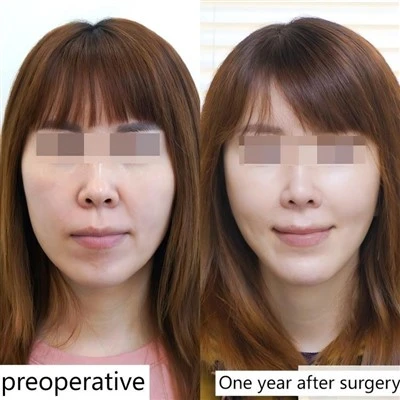
7.Clinical Outcome Comparison (Pre vs Post Operation)
|
Evaluation Dimension |
Preoperative Condition |
Postoperative Outcome |
|
Malar Projection |
Flattened / volume loss |
Restored anterior cheek projection |
|
Midface Position |
Inferior soft tissue descent |
Repositioned to youthful anatomical vector |
|
Nasolabial Fold |
Deep and prominent |
Significantly softened and lifted |
|
Cheek Contour Definition |
Blurred facial contour |
Improved midface definition and structure |
|
Fat Compartment Position |
Inferior migration |
Repositioned and stabilized within midface zone |
|
Overall Facial Expression |
Tired / aged appearance |
More balanced, youthful midface appearance |
|
Structural Support |
Ligament laxity and weakening |
Reinforced deep structural support system |
FAQ
Q: Is this a surgical device or a procedural system?
A: It is a structured clinical surgical framework designed to standardize midfacial rejuvenation procedures and improve consistency across surgical operators.
Q: Who is the system intended for?
A: It is intended for board-certified plastic surgeons, hospital-based surgical departments, and licensed aesthetic surgery centers.
Q: What clinical foundation supports this system?
A: The system is based on established facial anatomical principles, including SMAS-based midfacial support structures, retaining ligament anatomy, and long-term clinical experience in facial rejuvenation surgery.
Q: Can the system be standardized across different surgeons?
A: Yes. It is specifically designed to reduce inter-surgeon variability through structured anatomical guidance and standardized procedural sequencing.
Q: What are the primary clinical indications?
A: Mild to moderate midfacial aging, cheek ptosis, malar flattening, and loss of midfacial structural support.
Q: Is the system intended to produce natural aesthetic outcomes?
A: Yes. The system is designed to restore natural midfacial vector balance and anatomical proportion without excessive tension or overcorrection.
Hot Tags: cheek lift surgery, China, prices, cost, bookings, curing